Service line 01 · Research
Market, competitor and keyword research
Every project starts here. We study your competitors, your customers and what they search for, so your brand, website and content are built on evidence, not on taste.
What's included
Five services, one brief
Take one service or combine them. Each one below has its own section: what it answers and what you receive.
-
Competitor Analysis
Who you compete with, what they claim and where the gap is.
-
Market Research & Voice of Customer
Interviews, surveys and reviews, in your customers' own words.
-
Keyword Research for Web & YouTube
What your audience searches for on Google and on YouTube.
-
Keyword Clustering
Keywords grouped by intent, one page per cluster.
-
Competitor & Trend Monitoring
A regular report on what changed in your market.
Service 01 of 05
Competitor Analysis
We map your direct and indirect competitors: their positioning, offers, prices, channels and content. You see where the market is crowded and where there is room to win.
Questions it answers
- Who are you really competing with, including the indirect options?
- Where is the market crowded, and where is there room?
What you get
- Map of direct and indirect competitors
- Positioning and messaging comparison
- Offer, pricing and channel analysis
- Content and search visibility benchmark
- Gaps and opportunities, ranked
Service 02 of 05
Market Research & Voice of Customer
The words your customers use are the best copy you will ever get. We run interviews and surveys, read reviews and support chats, and turn them into needs, objections and language you can use.
Questions it answers
- Why do customers buy, and what stops them?
- Which words do they use to describe the problem?
What you get
- Customer interviews and surveys
- Review and comment mining
- Personas built on real quotes
- Needs, objections and buying triggers
- A voice-of-customer phrase bank
Service 03 of 05
Keyword Research for Web & YouTube
We find the searches your future customers make on Google and on YouTube, with volume, difficulty and intent, so content is planned around demand rather than guesses.
Questions it answers
- What does your audience search for before they buy?
- Which topics deserve a page, and which deserve a video?
What you get
- Seed and competitor keyword harvest
- Volume, difficulty and intent for each term
- A separate YouTube list with video formats
- Questions and long-tail opportunities
- A prioritised keyword sheet
Service 04 of 05
Keyword Clustering
Thousands of keywords become a site plan. We group the terms that share one search intent, so each cluster maps to one page and no two pages compete for the same search.
Questions it answers
- How many pages does the site really need?
- Which page should rank for which search?
What you get
- Clusters by shared search intent
- One target page for each cluster
- Pillar and supporting page structure
- An internal linking plan
- A content calendar in priority order
Service 05 of 05
Competitor & Trend Monitoring
Markets move every month. We track your competitors' launches, prices, content and rankings, and the trends in your category, then tell you what changed and what to do about it.
Questions it answers
- What did competitors launch, change or publish this month?
- Which trends are growing in your category?
What you get
- A monthly competitor change report
- Ranking and visibility tracking
- New campaigns, offers and content spotted
- Search and social trend watch
- Recommended actions for next month
Process
How a research project runs
Four stages. Each one ends with something you can see, check and approve before the next begins.
-
Frame
We agree the decisions the research must support, so nothing is collected for its own sake.
-
Collect
Competitor sites and ads, customer interviews, reviews and keyword data from several sources.
-
Analyse
Maps, clusters and personas that show the patterns, the gaps and the size of each opportunity.
-
Hand over
Findings ranked by what to do first, ready for the brand strategy, the site plan and the content calendar.
Results
Selected research work
-
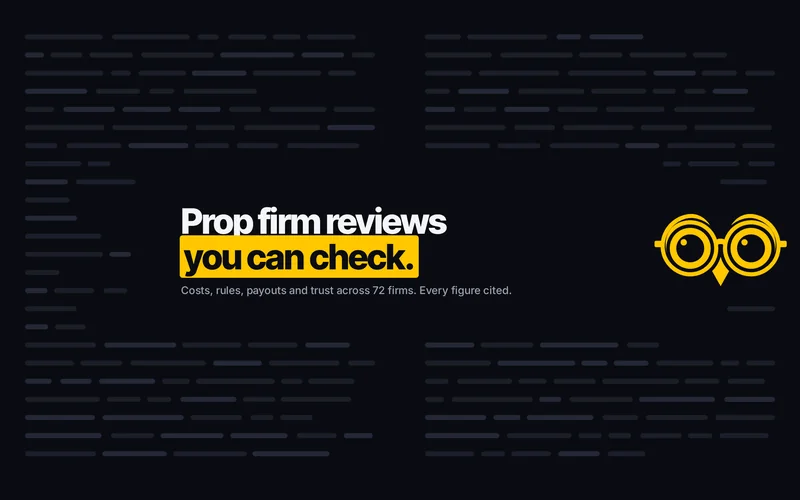
Building a prop firm review site from the data up
96.7% of published figures linked to their source
-
Repositioning an investing app for first-time investors
+64% sign-ups in six months
-
A content engine built on what shoppers actually search
3.2× organic traffic in a year
Questions
Questions about research
More about pricing, contracts and working together is on the FAQ page.
Read the FAQWhy does research come before branding?
A brand strategy is a set of choices, and research is what the choices are made from. It shows which position is still free, which words your customers use and what they search for. The brand is then built on what the market shows, not on guesses.
Where does your keyword data come from?
We combine several keyword tools with Google's own suggestions and, when you share it, your Search Console data. For YouTube we add its search suggestions and a study of competing channels, because web search volumes do not transfer to video.
How many keywords does a project cover?
It depends on the market. A focused local business may need a few hundred terms; an online store can need several thousand. Clustering is what keeps a large list usable.
How is voice-of-customer research different from a survey?
A survey counts answers to the questions you thought to ask. Voice-of-customer research collects the words customers use on their own, in interviews, reviews and support chats, so it finds the questions you did not think of.
Do we need monitoring after the first research?
Not always. Monitoring pays off in a market where competitors launch, change prices or publish often. After the first report we will tell you whether yours is one of them.
Start a project
Let's hear what your market is saying.
Tell us the decision you need to make and what you already know. We reply within two working days. Sending a formal RFP? Email it to [email protected].